CEO interview: Market shifts in the e-bike drive business
Details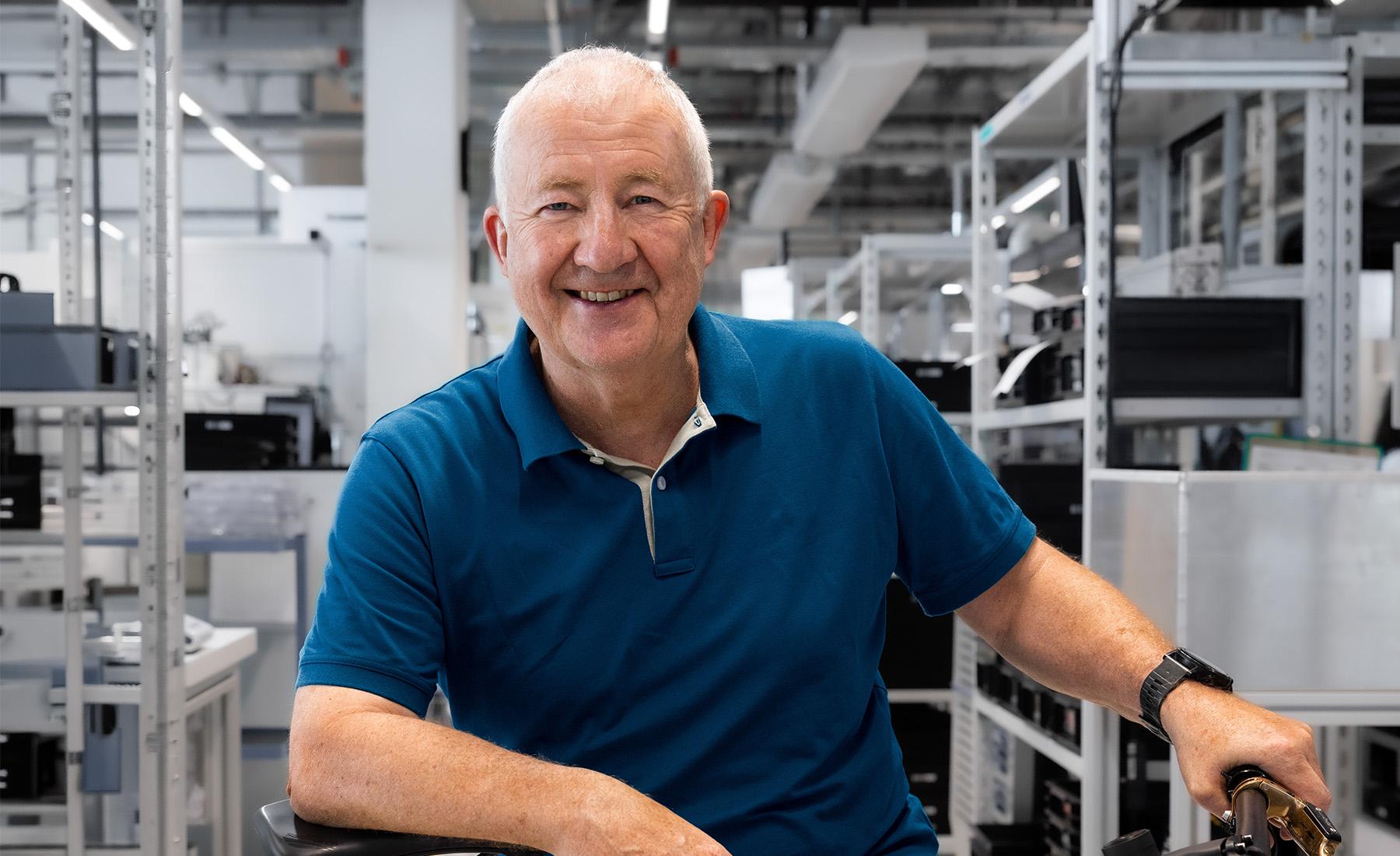
An interview with Eugen Elmiger, CEO maxon group
The market for e-bike drives is in a phase of transformation. New players are focusing on ever higher performance figures, while established manufacturers are adjusting their strategies. At the same time, developments surrounding Fazua and its environment are creating uncertainty for many market participants. For manufacturers, this raises new questions about which partners and technologies they should rely on in the future. A conversation with Eugen Elmiger, CEO of maxon, about opportunities, risks, and responsibility in a changing market.
Mr. Elmiger, the market is currently discussing the situation around Fazua. What does this mean for maxon?
First of all, it must be said that competition is essential for the development of a market. Providers such as Fazua have delivered important impulses, particularly in the segment of lightweight, sporty e-bikes. Accordingly, the current developments are being closely observed by many manufacturers, dealers, and end customers.
In phases like this, responsibility within the industry shifts. Companies that remain committed to the market over the long term are increasingly measured by whether they can provide stability and orientation.
Where do you see new opportunities emerging?
Structural changes almost always create room for new constellations. This particularly concerns the question of dependencies within the value chain. In recent years, stronger vertical integration by certain players has become apparent, often with overlaps between system suppliers and bicycle brands. This creates efficiency, but it can also lead to conflicts of interest.
Against this background, interest in independent technology partners is growing. For many manufacturers, maximum performance figures are currently less important than topics such as differentiation, control over their own product, and long-term planning reliability.
How is maxon positioned in this environment?
maxon pursues a consistently rider-centric approach. With the BIKEDRIVE AIR S, we address a segment where peak torque or maximum power are not the decisive factors, but rather the interaction between riding feel, efficiency, and system integration.
The focus is on achieving the most natural assistance behavior possible, ensuring robust technical design, and enabling manufacturers to preserve their own brand identity. Especially in categories such as urban, gravel, or road, this differentiation is becoming increasingly important.
At the same time, the market is moving toward higher performance figures. Isn’t a more moderate approach risky?
That is a valid question. Higher performance is clearly a dominant trend. The key issue, however, is whether more power automatically results in a better product and user experience. A segment of customers is deliberately not looking for a motorized vehicle, but still wants a bicycle with a supportive function.
In addition, there is a regulatory dimension. As performance figures increase, questions of classification and acceptance come more strongly into focus. The industry has a shared interest in clearly positioning the pedelec as a bicycle and ensuring its accessibility in the long term.
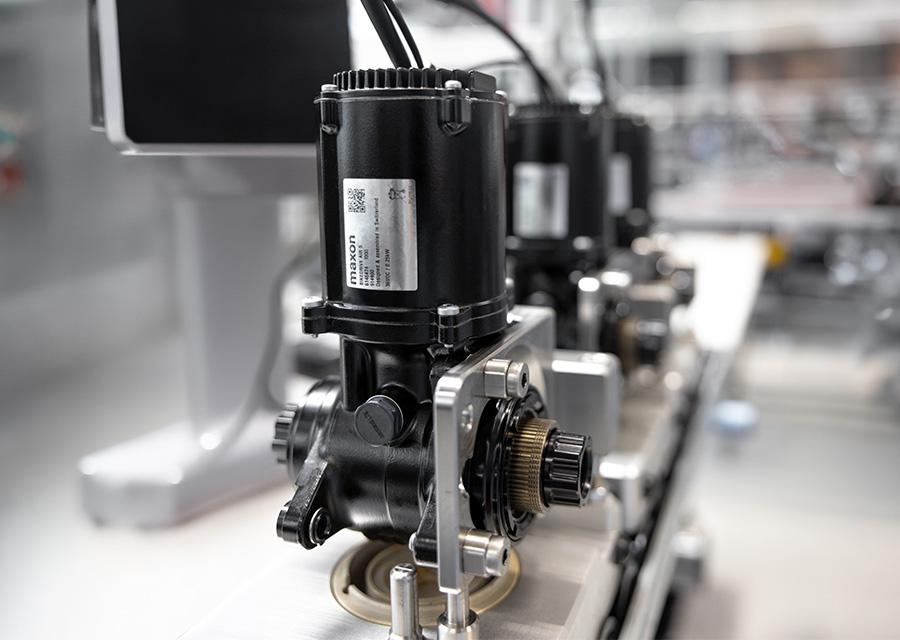
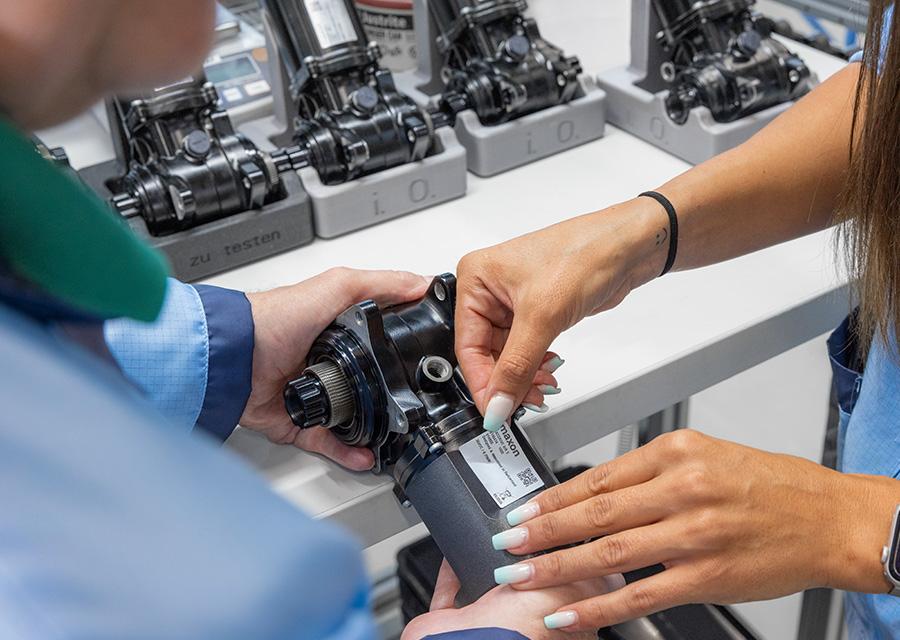
Left maxon's e-bike motor manufacturing
Right Labeling the 1000th maxon AIR S drive
Where do you see the biggest risks for maxon?
One central risk is the speed at which market decisions are made. Platforms for new model generations are defined at an early stage. If you are not present in this phase, you will hardly be considered, regardless of technical quality.
Another risk lies in the increasing focus on individual metrics, particularly torque. If the discussion narrows to this, other characteristics such as efficiency, precision, or reliability risk fading into the background.
How is maxon addressing these challenges?
At its core, by consistently adhering to our approach. This means, first, prioritizing technological substance over short-term effects. Our systems are designed for continuous operation and reproducible performance.
Second, we understand collaboration with OEMs as a joint development process, not as the delivery of a finished system. And third, we pursue a long-term platform strategy intended to provide planning reliability.
Especially in a volatile market environment, this form of consistency becomes increasingly important.
Will maxon benefit from the current market shifts?
There is no automatic effect. Trust does not arise from individual events, but from continuity over longer periods of time.
However, it can be observed that many manufacturers are reassessing their previous assumptions. In this context, maxon is increasingly perceived as a technologically consistent and independent provider. If an advantage emerges from this, it will be the result of long-term positioning rather than a short-term reaction.
What can partners and manufacturers expect from you in the future?
Above all, clarity: in our technology, in our platforms, and in our position in the market.
In a dynamic environment, we act consistently. We are an independent partner, we develop precise systems, and we place the riding experience at the center.
We are convinced that this focus will make the difference in the long term, even in a market that is currently being redefined.